Article at a Glance
What You Will Learn
The Problem
Most event businesses treat email as an afterthought: a channel for logistics rather than a tool for building the kind of anticipation that sells tickets before they go on sale.
The Solution
Five email marketing principles from Laneway Festival that any event business can adopt, from treating the mailing list as a product to creating real urgency through staggered, city-specific communications.
Who It Is For
Event venue managers, festival organisers, conference producers, and marketing managers at experience businesses who want to build anticipation and drive ticket sales through email.
Key Takeaway
Laneway sold out Sydney within days. Their approach treats the mailing list not as a broadcast channel but as an access pass, creating a community of insiders who sell the event to themselves.
The Context: 200,000 Fans, Every Show Sold Out
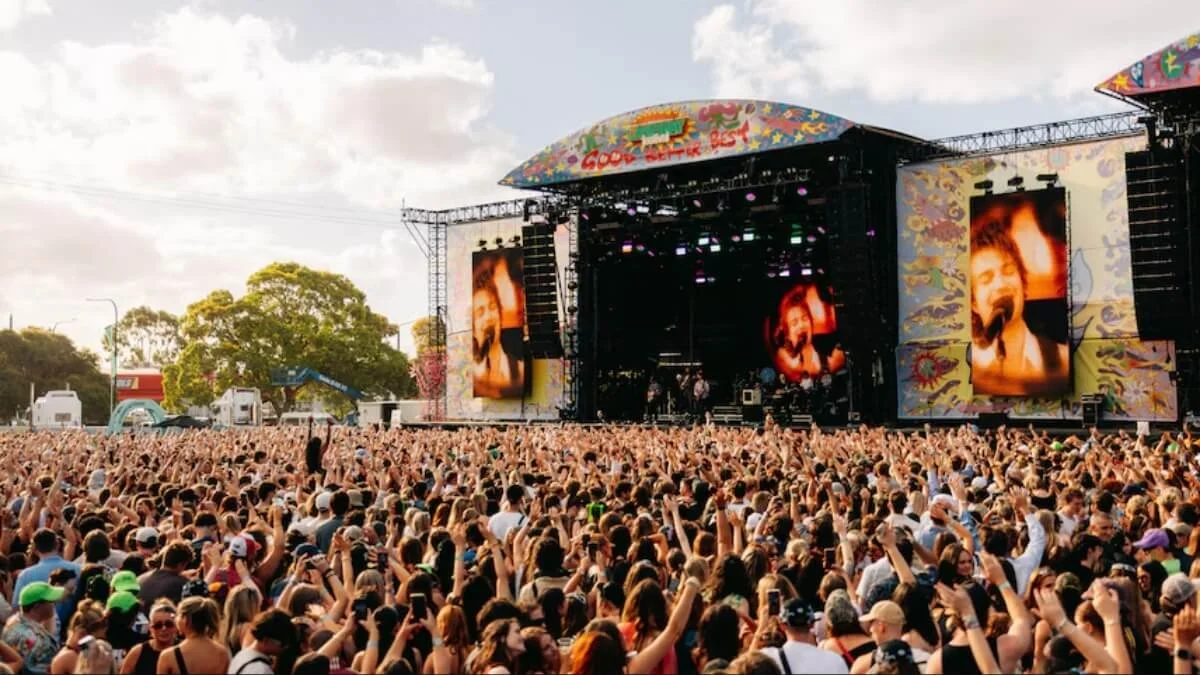
St. Jerome's Laneway Festival has been a fixture of the Australian and New Zealand music calendar since 2005, when it began as a small street party in a Melbourne laneway with 1,400 attendees. Twenty-one years later, the 2025 edition drew over 200,000 fans to sold-out shows across Auckland, Brisbane, Sydney, Melbourne, Adelaide, and Perth, with an additional 40,000 at sideshows.
In 2026, celebrating its 21st birthday with Chappell Roan headlining, Sydney sold out within days of going on sale. This level of demand is not simply the result of a compelling lineup, though headliners including PinkPantheress, Wolf Alice, and Wet Leg certainly helped. It is the result of a communication strategy that builds anticipation systematically, using email as the primary mechanism for transforming general interest into urgent action.
200,000+
Fans across six cities (2025)
21
Years of Laneway Festival
Days
Time to sell out Sydney 2026
What Laneway does with email is worth studying not because every event business can operate at the same scale, but because the principles behind their approach apply whether you are selling 40,000 tickets or 40 seats.
Lesson 1: The Mailing List Is the First Product
Before the lineup is announced. Before tickets go on sale. Before any advertising spend. Laneway drives email sign-ups with a single, clear promise: be the first to know.
The Laneway website treats the newsletter sign-up as a primary call to action, not an afterthought buried in the footer. The framing positions the mailing list as access rather than subscription. Joining the list means you are inside. Not joining means you are waiting with everyone else.
This distinction is subtle but strategically important. Most event businesses position their mailing list as "stay updated" or "get news." Laneway positions it as "be first." The difference is the difference between passive information and active advantage.
Key Insight
The mailing list is not a marketing tool. It is the first product. When subscribers perceive the list itself as valuable, because it provides access others do not have, the list grows organically and engagement rates remain high. This reframing transforms a routine sign-up form into a strategic asset.
For event venues and organisers of any scale, this principle is immediately applicable. A wedding venue that offers its mailing list first access to peak-date availability creates the same psychology. A conference that gives subscribers early-bird registration before public announcement creates the same urgency. The mechanism is identical: make the list worth joining for what it provides, not merely for what it promises to inform.
Lesson 2: Staggered Reveals Create Multiple Email Moments
Laneway does not announce its entire lineup at once. The lineup is revealed in waves, with each wave triggering a new email to the list. The initial announcement generates the first spike of attention. Subsequent reveals, spaced days or weeks apart, create additional email moments, each with a genuine reason to exist.
This approach solves one of the fundamental challenges of event email marketing: the content calendar problem. Most events have two natural email moments: the announcement and the ticket on-sale date. Between these two dates, and after the on-sale date, many event businesses struggle to find reasons to email that feel substantive rather than repetitive.
Staggered reveals solve this by creating content naturally. Each new artist announcement, each venue confirmation, each schedule release becomes an email with inherent news value. The subscriber opens these emails not out of obligation but out of genuine curiosity: who else has been added?
According to DemandSage's 2026 email analysis, segmented and personalised email campaigns are responsible for 58% of all email-generated revenue. Laneway's staggered reveal strategy is a form of temporal segmentation: delivering the right information at the right moment to maintain engagement across weeks rather than concentrating it in a single burst.
For smaller events, the same principle applies with different content. A food festival might reveal participating restaurants over several weeks. A conference might announce keynote speakers individually. A venue might preview its seasonal programme one event at a time. The principle is consistent: give your audience multiple reasons to open your emails by distributing your most compelling content across time.
Lesson 3: Pre-Sale Access Is Exclusive to the List
The Laneway pre-sale opens a full day before general on-sale, with staggered release times across each city. The email list is not just informed first. It can act first. This is the conversion mechanism.
The psychology here is powerful. The subscriber does not merely know about the pre-sale. They have access that non-subscribers do not. When they share this information with friends, they are sharing an advantage, which naturally drives further sign-ups and reinforces the value of being on the list.
As InboxAlly's research demonstrates, nearly 50% of consumers made a purchase directly from an email in the past year. When that email carries exclusive access to something desirable, the conversion rate is substantially higher.
Pre-sale access transforms the mailing list from a communication channel into a competitive advantage for the subscriber. The list is no longer something the event uses to reach people. It is something people use to reach the event.
For event venues, this principle translates directly. A venue offering subscribers first access to peak-date bookings, priority registration for popular events, or exclusive early-bird pricing creates the same dynamic: the list provides tangible advantage, which drives growth and engagement simultaneously.
Lesson 4: City-by-City Urgency Is Built Into the Sequence
When Sydney sells out, that becomes content for every other city's email: "Sydney is gone. Melbourne pre-sale opens Tuesday." This is real scarcity communicated in real time. Not manufactured urgency. Genuine demand.
This city-by-city approach creates a cascade effect. Each sell-out event validates the next city's pre-sale. Subscribers in Melbourne who see that Sydney sold out within days understand that their window is limited. The urgency is not artificial; it is evidence-based.
According to EmailChef's 2026 analysis, email marketing generates an average return of EUR 42 for every euro invested. In event marketing, where each email can drive ticket purchases of $100 or more, the ROI on well-timed urgency emails can be extraordinary.
The lesson for event businesses of any scale: use real data to create real urgency. "Only 15 seats remaining for the December gala" is more persuasive than "Book now." "Three couples have booked the March 2027 Saturday already" is more effective than "Popular dates fill quickly." Specificity drives action because it provides evidence rather than assertion.
Lesson 5: The Relationship Continues After the Final Set
Most event businesses treat the event itself as the end of the communication cycle. Laneway treats it as a transition. Within days of the 2025 festival ending, the co-founders confirmed the 2026 return. The website immediately repositioned its newsletter sign-up around the next edition.
The mailing list never goes dormant. The cycle of anticipation begins again the moment the current cycle concludes. This continuity ensures that the subscriber base carries forward year to year, growing incrementally rather than rebuilding from zero each time.
For event venues, this principle is particularly valuable. A wedding venue that follows up six months after an event with congratulations and a first-anniversary dining offer maintains a relationship that generates referrals and potential repeat bookings. A conference that sends a post-event survey, followed by early notification of the next edition's dates, keeps the relationship alive during the gap between events.
Why This Matters
The cost of acquiring a new email subscriber is always higher than the cost of retaining an existing one. Events that maintain year-round communication with their subscriber base spend less on acquisition for each subsequent edition because they are building on a foundation rather than starting fresh.
Applying This to Your Events: You Do Not Need 200,000 Fans
The five principles above work at any scale because they address universal human psychology, not festival-specific logistics. The desire to feel like an insider. The pleasure of anticipation. The motivation of genuine scarcity. The comfort of a relationship that extends beyond a single transaction.
A 200-seat event venue can implement all five principles with a modest email platform and a thoughtful content strategy. The mailing list positioned as access. Announcements staggered across weeks. Pre-sale windows for subscribers. Real capacity data shared honestly. Post-event communication that transitions into anticipation for the next season.
What matters is not the scale but the structure. Laneway did not invent these principles. They applied them with consistency and confidence. Any event business willing to invest the same care in their email programme can achieve proportionally similar results.
Building Your System: Practical First Steps
Reframe your sign-up. Change your mailing list copy from "Sign up for updates" to something that communicates access: "Be the first to know. Subscribers receive pre-sale access and priority booking." This single change can meaningfully increase sign-up conversion rates.
Plan your reveals. Before your next season or event series, identify four to six announcement moments. Map each to an email. Write the subject lines before you write the content, because the subject line determines whether the content is read.
Create a pre-sale window. Even 24 hours of exclusive access for subscribers transforms the list from passive to active. Communicate this advantage clearly on your sign-up page and in every email leading up to the sale.
Share real numbers. When capacity fills, say so. "40% of tables for the December programme are now reserved" is both honest and motivating. Subscribers who see genuine demand respond with genuine urgency.
Close the loop. After the event, send a thank-you email within 48 hours. Follow it with a feedback request. Follow that with an early announcement or save-the-date for the next edition. The gap between events is where most subscriber relationships decay. Fill that gap with content that maintains anticipation.
Laneway does not use email to sell tickets. They use email to build a community that sells itself. The waiting list, the pre-sale, the staggered reveals: each touchpoint is designed to make the audience feel like insiders, not customers. This is a principle available to every event business willing to invest in the relationship.
The infrastructure is simple. The discipline is ongoing. The results, as 200,000 fans across six sold-out cities demonstrate, are transformative.
Frequently Asked Questions
How does Laneway Festival use email to sell out events?
Laneway positions its mailing list as an access pass rather than a newsletter. Subscribers receive lineup reveals before public announcements, pre-sale access a full day before general on-sale with staggered city release times, and real-time urgency updates when shows sell out. This creates a community of insiders whose anticipation drives ticket sales.
Can small event venues use the same email strategy as large festivals?
Yes. The principles scale regardless of event size. A 200-person venue can implement the same structure: a compelling reason to join the mailing list, staggered announcements that create multiple email moments, exclusive access or early booking for subscribers, and genuine urgency based on limited capacity. The numbers are smaller, but the psychology is identical.
What is the most important email for event marketing?
The pre-sale access email consistently drives the highest conversion for event businesses. When subscribers know they can act before the general public, the mailing list shifts from a communication channel to a competitive advantage. This email should clearly communicate what is exclusive, when the window opens, and how to act. Simplicity drives urgency.