Article at a Glance
What You Will Learn
The Problem
Most boutique hotels attempt to compete with chain loyalty programmes using points and tiers, which are expensive to administer and feel misaligned with the intimate, personalised experience that makes boutique properties special.
The Solution
The Calile Hotel's Friends of Calile programme demonstrates an alternative: a simple, elegant exchange that captures guest preferences, drives direct bookings, and feels like an extension of the property rather than a marketing overlay.
Who It Is For
Hotel owners, general managers, and marketing managers at boutique and independent properties seeking to build a loyalty mechanism that aligns with their brand and drives direct bookings.
Key Takeaway
The most effective boutique hotel loyalty programmes are not about points or discounts. They are about creating a membership experience that feels like being known: a relationship where the property anticipates your preferences because you have trusted them with the information.
The Calile: Where Design Meets Hospitality
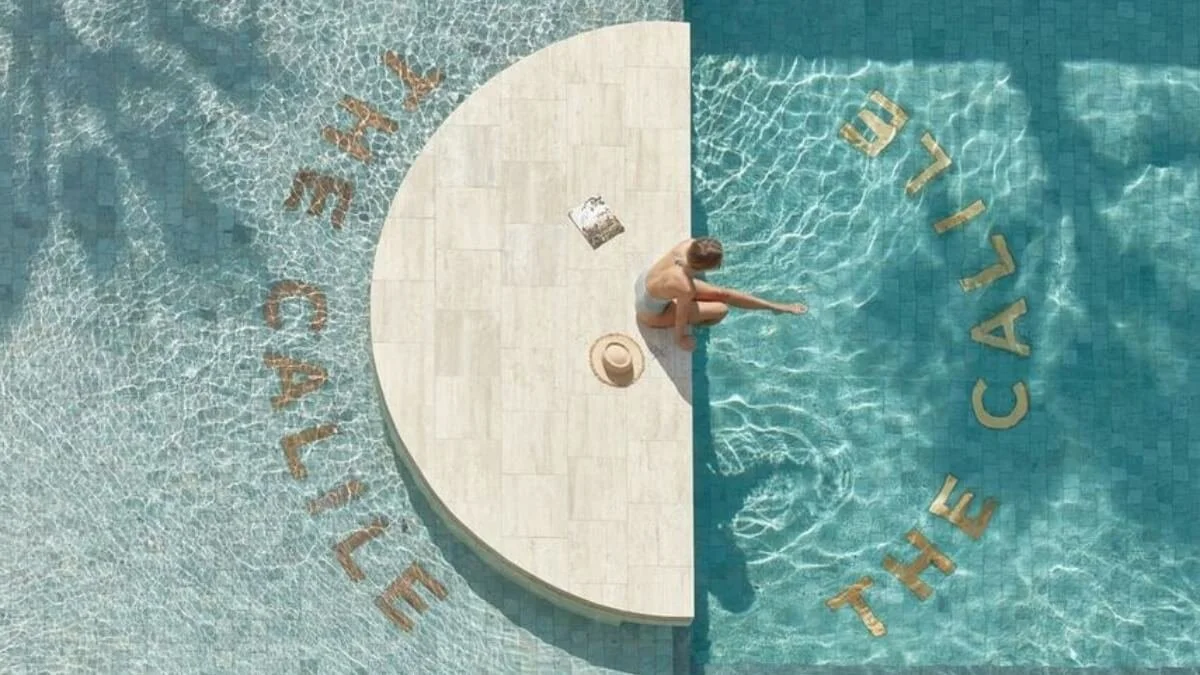
The Calile Hotel occupies a singular position in Australian hospitality. Located on James Street in Brisbane's Fortitude Valley, it has been recognised among the top 25 hotels globally, a distinction that reflects not just the quality of the rooms or the architecture but the coherence of the entire guest experience.
That coherence extends from the physical spaces, designed by Richards and Spence with a Mediterranean-meets-subtropical sensibility, through to the digital touchpoints. The Calile's brand identity, crafted by Studio Bland, maintains a consistency that most properties never achieve: the same aesthetic restraint, the same confident minimalism, the same sense that every detail has been considered.
This consistency makes The Calile's approach to guest loyalty particularly worth studying. In an industry where loyalty programmes are typically bolted on as marketing afterthoughts, The Calile has built something that feels integral to the property itself.
The Friends of Calile Model
Friends of Calile is not a traditional loyalty programme. There are no tiers to climb, no points to accumulate, no status badges to display. It is, in essence, a simple and elegant exchange: the guest shares their preferences and commits to a direct relationship with the property, and in return receives personalised service, direct booking benefits, and communications that reflect the thoughtfulness of the on-property experience.
This simplicity is itself a strategic choice. Chain hotels can afford to build and administer multi-tiered programmes with millions of members and complex earning structures. A boutique property attempting to replicate that model faces prohibitive costs and, more importantly, a fundamental misalignment: the intimacy that defines boutique hospitality is the opposite of the mass-market mechanics of a points programme.
Key Insight
The Calile understood that boutique hotel guests do not want points. They want to be known. The Friends of Calile programme captures the information needed to deliver that recognition, room preferences, dining choices, celebration dates, and builds a direct booking incentive around it.
Lesson 1: Simplicity as Strategy
The most striking aspect of the Friends of Calile programme is what it does not include. No earning rates. No redemption thresholds. No elite tiers. No mobile app with a digital loyalty card.
This restraint is deliberate. Every element added to a loyalty programme introduces friction: complexity the guest must navigate, terms they must understand, and mechanics they must engage with to derive value. For a boutique property, where the guest relationship is personal and the service is intuitive, that friction undermines the very experience the programme is meant to enhance.
The lesson for other properties is clear: loyalty does not require complexity. A programme that captures preferences, delivers a genuine benefit for direct booking, and communicates with the same voice as the property itself can outperform a sophisticated points system simply by being easier to use and more aligned with the guest experience.
Lesson 2: Data Capture by Design
The Friends of Calile programme is, at its core, a data capture mechanism. When a guest joins, they share information that enables the property to personalise future stays: room preferences, dietary requirements, celebration dates, and communication preferences.
This data is exponentially more valuable than a purchase history. A purchase history tells you what a guest bought. Preference data tells you what they want. The difference is the difference between reactive service (responding to requests) and anticipatory service (preparing before the guest asks).
According to Revinate's research, OTA email addresses appear in 34% of all hotel database records in the EMEA region, representing contacts that are functionally unreachable for direct marketing. The Calile's programme specifically addresses this data gap by creating a compelling reason for guests to share their real contact information and preferences directly.
34%
Hotel records with OTA emails (unreachable)
83.6%
Welcome email open rate
$36-42
Average email marketing ROI per $1
For properties implementing a similar programme, the data capture moment should be as frictionless as possible: a brief, well-designed form during booking or check-in, with a clear explanation of how the information will be used to improve the guest's experience.
Lesson 3: Brand Alignment in Every Email
The Calile's email communications are notable for what they share with the property itself: visual restraint, confident typography, generous white space, and language that is warm without being effusive. Every email feels like it belongs to the same world as the lobby, the pool deck, and the restaurant.
This alignment is not decorative. It is strategic. When a guest receives an email from The Calile, the visual and tonal consistency triggers the same positive associations as the physical experience. The email does not just communicate information; it transports the reader, briefly, back to the property.
Studio Bland's design system extends to every digital touchpoint, ensuring that whether the guest encounters The Calile on social media, on the website, or in their inbox, the experience is unmistakably the same brand. This consistency builds trust, reinforces the premium positioning, and makes each email feel considered rather than mass-produced.
The most effective hotel emails do not look like marketing emails. They look like an extension of the property. When a guest opens your email and feels the same aesthetic, the same warmth, and the same care they experienced on-property, the email becomes a touchpoint in the ongoing guest relationship rather than an interruption in their inbox.
Lesson 4: The Direct Booking Incentive That Feels Like Hospitality
Friends of Calile includes a direct booking benefit, but it is framed as hospitality rather than commerce. The incentive is not a percentage discount (which would cheapen the brand). It is an experience enhancement: the kind of thoughtful addition that feels like something the property would do naturally for a returning guest.
This framing is essential. A discount says, "We will charge you less." An experience enhancement says, "We will care for you more." Both motivate direct booking, but the latter preserves rate integrity and reinforces the value proposition that makes the property premium.
For properties designing their own direct booking incentives, the principle is consistent: offer something that enhances the stay rather than reducing the price. A welcome amenity, a guaranteed room preference, early check-in, late checkout, a complimentary treatment, or a dining credit all create value without eroding the rate.
Lesson 5: Calls to Action That Feel Like Invitations
The Calile's email CTAs are worth examining in detail. They do not use the language of urgency ("Book now," "Limited availability," "Don't miss out"). They use the language of hospitality ("We have a table waiting," "Your favourite suite is available," "Come back to the terrace").
This linguistic choice reflects a deeper understanding: the guest who responds to a Calile email is not making a purchase. They are accepting an invitation. The CTA should feel like an invitation extended by someone who genuinely wants them to return, not a prompt generated by a marketing automation platform.
According to Designmodo's email marketing analysis, visual and contextual CTAs consistently outperform generic text-only buttons. The Calile's approach, pairing a beautiful property image with an invitation-style CTA, represents best practice in hospitality email conversion.
Applying This to Your Property
The Calile operates at the top end of the Australian boutique hotel market, with the design resources and brand sophistication to match. However, the principles underlying Friends of Calile are applicable at every scale and price point.
Keep it simple. Your loyalty programme should be explainable in one sentence. If it requires a FAQ page to understand, it is too complex for a boutique property. "Join to receive personalised service, early access to seasonal offers, and the best rate guaranteed when you book direct" is sufficient.
Capture preferences, not just data. The sign-up form should ask questions that enable personalisation: room preferences, dietary requirements, travel purpose, celebration dates. This data powers the anticipatory service that transforms a first-time guest into a repeat one.
Align every email with your brand. Your email templates should use the same fonts, colours, photography style, and language as your website and on-property materials. If your property is coastal and relaxed, your emails should feel coastal and relaxed. If your property is heritage and refined, the emails should reflect that elegance.
Frame incentives as hospitality. Offer an experience enhancement rather than a rate discount. A complimentary breakfast, a welcome bottle from a local winemaker, or a guaranteed upgrade when available all motivate direct booking while preserving your rate integrity.
Write CTAs as invitations. Replace "Book Now" with language that reflects your property's voice. "We would love to welcome you back" is warmer than "Reserve your stay." "Your table is waiting" is more compelling than "Make a restaurant reservation."
The Calile did not invent these principles. They applied them with a consistency and aesthetic confidence that most properties have not yet achieved. The opportunity for boutique hotels at every level is to study what The Calile understood and apply those insights to their own guest relationships.
The most effective loyalty programme for a boutique hotel is not a programme at all. It is a formalisation of something great hospitality properties already do naturally: remembering their guests, anticipating their needs, and making them feel genuinely welcome every time they return.
Friends of Calile works because it feels like what it is: an extension of the property's hospitality, delivered through a channel that most hotels treat as an afterthought. The inbox, like the lobby, is a place where the guest experience either deepens or diminishes. The Calile chose to deepen it.
Frequently Asked Questions
What is the Friends of Calile programme?
Friends of Calile is The Calile Hotel's membership programme. Rather than using a traditional points-and-tiers structure, it offers a simple value exchange: guests share their preferences and booking details in return for personalised service, direct booking benefits, and communications that reflect the property's distinctive design-forward brand. The programme captures guest data in a way that enables genuine personalisation rather than generic marketing.
Can a small boutique hotel create a loyalty programme without major investment?
Yes. The Calile model demonstrates that effective loyalty does not require complex technology or significant investment. A simple opt-in programme that captures guest preferences, offers a genuine benefit for direct booking (such as a welcome amenity, early check-in, or room preference guarantee), and communicates through well-crafted, brand-aligned emails can be built using any modern email platform and a basic integration with your property management system.
How does a loyalty programme help reduce OTA dependency?
A loyalty programme gives past guests a tangible reason to book direct rather than through an OTA. When the guest knows that booking through the hotel's own channel means their preferences will be remembered, their room will be prepared accordingly, and they will receive personalised communications, the OTA's price comparison advantage diminishes. The loyalty programme shifts the value proposition from price to relationship.